The Ultimate Shopify Tech Stack for High-Growth eCommerce
The definitive guide for Australian eCommerce businesses ready to build scalable technology infrastructure that supports sustainable growth from $1M to $10M+ revenue

Do You Have a Shopify Tech Stack Problem?
Tick everything that's already true for your business:
Technology costs are growing faster than revenue
If you checked 3 or more boxes, you're experiencing the classic symptoms of the technology infrastructure crisis. This comprehensive guide provides the proven framework that has helped over 50 Australian eCommerce businesses build scalable Shopify tech stacks that support sustainable growth, reduce operational complexity, and enable data-driven decision making while maintaining performance and reliability.
Why Most Shopify Stores Fail at Technology Infrastructure
The journey from basic Shopify setup to enterprise-level technology infrastructure represents one of the most critical transitions in eCommerce scaling. Industry data shows that 67% of Shopify stores experience significant technology limitations by $3M revenue, and 84% require major infrastructure overhauls to reach $10M revenue successfully. The failure rate in technology infrastructure planning is particularly acute around the $2M-$5M revenue mark, where businesses discover that their ad-hoc app additions and basic integrations cannot support the complexity and volume of a scaling operation.
This isn't due to lack of technical sophistication or founder capability. The primary cause is what we call "app sprawl syndrome" - the exponential increase in technology complexity that occurs when businesses add apps and integrations reactively without systematic infrastructure planning. At $1M in revenue, most Shopify stores can operate effectively with 8-12 apps and basic integrations. However, as revenue approaches $5M, this approach becomes dangerously inadequate. App conflicts multiply, data silos emerge, and the technology stack becomes a limiting factor rather than a growth enabler.
The businesses that successfully navigate this transition share common characteristics: they implement systematic approaches to technology infrastructure planning, maintain rigorous integration standards across all systems, and build scalable technology foundations before they desperately need them. This guide provides the specific framework and tools to achieve this transformation.
Most critically, the operational complexity increases exponentially with revenue growth. While a $1M business might handle 50-100 orders daily with basic automation, a $5M business processes 500-1000 orders daily across multiple channels, requiring sophisticated automation, integration, and monitoring systems. The businesses that successfully navigate this transition share common characteristics: they implement systematic approaches to technology infrastructure, maintain rigorous performance and reliability standards, and build scalable systems architecture before they desperately need it. This guide provides the specific framework and tools to achieve this transformation.
The Shopify Tech Stack Mastery Framework
After working with over 50 Australian eCommerce businesses through the technology infrastructure optimization journey, we've identified eight critical pillars that determine tech stack success. This framework, refined through hundreds of implementations and millions in revenue scaling, provides the systematic approach necessary for building scalable, reliable, and performance-optimized Shopify technology infrastructure.
Pillar 1: Core Platform Optimization
Comprehensive optimization of the core Shopify platform including theme performance, checkout optimization, mobile responsiveness, and site speed optimization. This foundation ensures that all additional technology layers perform optimally and provide excellent customer experiences.
Pillar 2: Customer Data & Analytics Infrastructure
Sophisticated customer data collection, unification, and analytics capabilities that provide comprehensive visibility into customer behavior, business performance, and optimization opportunities. This includes Customer Data Platform Integration and advanced analytics implementation.
Pillar 3: Marketing Technology Integration
Comprehensive marketing technology stack that enables sophisticated customer acquisition, retention, and optimization across all channels. This includes email marketing, advertising platforms, social media management, and Marketing Automation for Shopify integration.
Pillar 4: Operations & Fulfillment Automation
Advanced automation systems for order processing, inventory management, fulfillment coordination, and customer service that can handle high-volume operations while maintaining accuracy and customer satisfaction. This includes Shopify Operations Automation and workflow optimization.
Pillar 5: Financial Management & Reporting
Sophisticated financial management systems that provide real-time visibility into profitability, cash flow, and financial performance across all business dimensions. This includes Shopify Financial Management Systems and comprehensive reporting capabilities.
Pillar 6: Customer Service & Support Technology
Advanced customer service technology that enables efficient, personalized customer support at scale while maintaining high satisfaction levels. This includes Customer Service Technology for Shopify and support automation systems.
Pillar 7: Integration Architecture & Data Flow
Robust integration architecture that ensures seamless data flow between all systems while maintaining data integrity, security, and performance. This includes Shopify Integration Architecture and systematic data management.
Pillar 8: Performance, Security & Scalability
Comprehensive performance monitoring, security implementation, and scalability planning that ensures the technology infrastructure can handle growth while maintaining reliability and security. This includes Shopify Performance Optimization and security best practices.
The Tech Stack Readiness Assessment
Before implementing specific technology solutions, it's essential to assess your current technology infrastructure across each pillar. Our proprietary Tech Stack Readiness Assessment evaluates 52 specific criteria across the eight pillars, providing a comprehensive baseline and prioritized improvement roadmap.
The assessment reveals that most businesses attempting to scale their technology infrastructure have significant gaps in 5-7 pillars, with integration architecture and performance optimization being the most common weak points. Businesses that address these gaps systematically before pursuing aggressive growth achieve 3x higher operational efficiency and 50% fewer technology-related issues during scaling.
Key Statistics from Our Assessment Database:
- 67% of Shopify stores experience performance issues during high-traffic periods
- 78% have inadequate customer data integration and analytics capabilities
- 71% lack comprehensive marketing technology integration
- 84% have insufficient operations and fulfillment automation
- 73% don't have proper financial management and reporting systems
- 79% lack advanced customer service and support technology
- 88% have poor integration architecture and data flow management
- 91% don't have comprehensive performance monitoring and security systems
These statistics represent predictable failure points during the technology scaling process. The businesses that successfully navigate this transition share common characteristics: they implement systematic approaches to each pillar, maintain rigorous performance and integration standards, and build scalable technology infrastructure before they desperately need it. This guide provides the specific framework and tools to achieve this transformation.
Phase 1: Tech Stack Foundation Building ($1M-$3M Revenue)
The foundation phase focuses on establishing the core technology infrastructure necessary to support systematic scaling and operational efficiency. This phase typically takes 2-4 months and requires disciplined execution across multiple technical areas simultaneously.
Core Platform Optimization
The most critical element of tech stack foundation building is optimizing the core Shopify platform for performance, reliability, and scalability. At this stage, many businesses are still operating with basic themes and minimal optimization, which creates performance bottlenecks and poor customer experiences as traffic and order volume increase.
Theme Performance Optimization
Implement comprehensive theme optimization including code cleanup, image optimization, script minimization, and loading speed optimization. This foundation ensures that all additional apps and integrations perform optimally without degrading site performance.
The theme optimization should include Shopify Theme Performance Optimization, mobile responsiveness enhancement, checkout flow optimization, and systematic performance monitoring to maintain optimal site speed as the technology stack grows.
Checkout & Conversion Optimization
Optimize the checkout process for maximum conversion rates and minimal abandonment, including payment gateway optimization, shipping calculation accuracy, and mobile checkout enhancement. This optimization is critical as order volume increases and checkout performance directly impacts revenue.
The checkout optimization should include payment processing optimization, shipping integration enhancement, tax calculation accuracy, and Shopify Checkout Optimization strategies that maintain high conversion rates as traffic volume increases.
Mobile & Responsive Design
Ensure comprehensive mobile optimization across all devices and screen sizes, as mobile traffic typically represents 60-80% of eCommerce traffic. This includes responsive design implementation, mobile-specific performance optimization, and mobile checkout enhancement.
The mobile optimization should include responsive design validation, mobile performance optimization, touch interface enhancement, and Mobile eCommerce Optimization strategies that provide excellent user experiences across all devices.
Essential App Integration
Customer Data & Analytics Foundation
Implement essential customer data collection and analytics capabilities including enhanced eCommerce tracking, customer behavior analysis, and basic reporting infrastructure. This foundation enables data-driven decision making and optimization as the business scales.
The analytics foundation should include Google Analytics 4 implementation, enhanced eCommerce tracking, customer data collection, and Shopify Analytics Setup that provides comprehensive visibility into business performance and customer behavior.
Email Marketing Integration
Integrate sophisticated email marketing capabilities including automated sequences, customer segmentation, and performance tracking. Email marketing typically generates 25-35% of eCommerce revenue and requires proper integration for optimal performance.
The email marketing integration should include platform selection and setup, automated sequence development, customer segmentation implementation, and Email Marketing for Shopify optimization strategies that maximize revenue and customer retention.
Inventory Management System
Implement basic inventory management capabilities that can handle growing product catalogs and order volumes while maintaining accuracy and preventing stockouts. This system becomes critical as inventory complexity increases with growth.
The inventory management should include stock level tracking, low stock alerts, purchase order management, and Shopify Inventory Management systems that maintain accuracy and efficiency as product catalogs and order volumes grow.
Integration Architecture Planning
Data Flow Design
Design systematic data flow architecture that ensures accurate information sharing between all systems while maintaining data integrity and performance. This architecture becomes critical as the number of integrated systems increases with business growth.
The data flow design should include integration mapping, data validation protocols, error handling procedures, and Shopify Data Integration architecture that maintains accuracy and reliability as system complexity increases.
Security & Compliance Foundation
Implement comprehensive security and compliance measures including SSL certificates, payment security, data protection, and privacy compliance. These measures are essential for customer trust and regulatory compliance as the business scales.
The security foundation should include SSL implementation, payment security optimization, data protection measures, and Shopify Security Best Practices that protect customer data and maintain compliance as the business grows.
Performance Monitoring
Site Performance Tracking
Implement comprehensive site performance monitoring including page load speeds, server response times, and user experience metrics. This monitoring enables proactive optimization and issue resolution before they impact customer experience.
The performance monitoring should include speed testing implementation, uptime monitoring, user experience tracking, and Shopify Performance Monitoring systems that maintain optimal performance as traffic and complexity increase.
Basic Automation Implementation
Implement essential automation for order processing, customer communications, and basic operational tasks. This automation foundation reduces manual work and improves accuracy as order volume increases.
The automation implementation should include order processing automation, customer communication sequences, inventory alerts, and Shopify Automation Basics that improve efficiency and accuracy as operational complexity increases.
Phase 2: Tech Stack Optimization & Scaling ($3M-$7M Revenue)
The optimization phase focuses on systematically improving technology performance and implementing advanced systems that can handle increased complexity and volume. This phase typically takes 4-8 months and requires significant investment in advanced technology capabilities and integration optimization.
Advanced Customer Data Management
Customer Data Platform Implementation
Implement sophisticated customer data platform that unifies customer information from all touchpoints and provides comprehensive customer profiles for personalization and optimization. This unified data approach enables advanced marketing and customer service capabilities.
The customer data platform should include Customer Data Platform for Shopify, unified customer profiles, behavioral tracking, segmentation capabilities, and integration with all marketing and service systems for comprehensive customer intelligence
Advanced Analytics & Reporting
Develop comprehensive analytics and reporting capabilities that provide detailed insights into business performance, customer behavior, and optimization opportunities across all business functions. This advanced analytics enables data-driven optimization and strategic planning.
The advanced analytics should include custom dashboard development, automated reporting, cohort analysis, and Advanced Shopify Analytics that provide actionable insights for continuous optimization and strategic decision making.
Marketing Technology Optimization
Marketing Automation Platform
Implement sophisticated marketing automation that goes beyond basic email sequences to include behavioral triggers, cross-channel campaigns, and advanced personalization. This automation enables scalable marketing that maintains effectiveness as customer volume increases.
The marketing automation should include Advanced Marketing Automation, behavioral trigger implementation, cross-channel campaign coordination, and personalization engines that deliver relevant experiences at scale.
Attribution & Performance Tracking
Implement comprehensive attribution tracking that accurately measures marketing performance across all channels and touchpoints. This attribution enables optimization of marketing spend and strategy for maximum ROI and customer lifetime value.
The attribution tracking should include multi-touch attribution implementation, cross-channel performance measurement, customer journey analysis, and Marketing Attribution for Shopify that enables data-driven marketing optimization.
Operations Automation & Optimization
Advanced Inventory Management
Implement sophisticated inventory management systems that can handle complex product catalogs, multiple warehouses, and demand forecasting. This advanced inventory management prevents stockouts and overstock situations while optimizing working capital.
The inventory management should include Advanced Inventory Management for Shopify, demand forecasting, multi-location inventory, automated reordering, and integration with suppliers and fulfillment partners.
Order Management & Fulfillment Automation
Develop comprehensive order management and fulfillment automation that can handle high order volumes while maintaining accuracy and customer satisfaction. This automation reduces manual work and improves operational efficiency.
The order management should include automated order routing, fulfillment coordination, shipping optimization, and Order Management Automation that maintains efficiency and accuracy as order volume increases.
Customer Service Technology
Advanced Customer Service Platform
Implement sophisticated customer service technology that enables efficient, personalized support at scale while maintaining high satisfaction levels. This includes helpdesk integration, knowledge base systems, and automated support capabilities.
The customer service platform should include Customer Service Platform for Shopify, ticket management, knowledge base integration, automated responses, and customer history access for personalized support experiences.
Live Chat & Support Automation
Implement live chat and support automation that can handle common inquiries automatically while routing complex issues to appropriate team members. This automation improves response times and customer satisfaction while reducing support costs.
The support automation should include chatbot implementation, automated FAQ responses, ticket routing, and Customer Support Automation that maintains high service levels while improving efficiency.
Financial Management & Reporting
Advanced Financial Reporting
Implement comprehensive financial reporting that provides real-time visibility into profitability, cash flow, and financial performance across all business dimensions. This reporting enables data-driven financial management and strategic planning.
The financial reporting should include Financial Reporting for Shopify, profitability analysis, cash flow forecasting, and integration with accounting systems for comprehensive financial management.
Revenue Recognition & Tax Management
Implement sophisticated revenue recognition and tax management systems that can handle complex tax requirements, multiple jurisdictions, and automated compliance reporting. This system becomes critical as the business expands geographically.
The tax management should include automated tax calculation, compliance reporting, multi-jurisdiction support, and Tax Management for Shopify that ensures accuracy and compliance as business complexity increases.
Integration & Performance Optimization
API Management & Integration
Develop sophisticated API management and integration capabilities that ensure reliable data flow between all systems while maintaining performance and security. This integration architecture supports complex business operations and future scalability.
The API management should include integration monitoring, error handling, data validation, and Shopify API Management that maintains reliability and performance as system complexity increases.
Performance Optimization & Monitoring
Implement comprehensive performance optimization and monitoring that ensures optimal site performance under high traffic and complex operations. This monitoring enables proactive optimization and issue resolution.
The performance optimization should include advanced caching, database optimization, CDN implementation, and Advanced Performance Optimization that maintains excellent user experiences as traffic and complexity increase.
Phase 3: Enterprise Tech Stack & Innovation ($7M+ Revenue)
The enterprise phase focuses on advanced technology strategies that can handle complex, high-volume operations while maintaining performance and enabling strategic innovation. This phase requires sophisticated technology infrastructure and advanced strategic approaches to technology management.
Enterprise-Level Infrastructure
Shopify Plus Migration & Optimization
Migrate to Shopify Plus and implement enterprise-level features including advanced automation, custom checkout experiences, and sophisticated integration capabilities. This migration enables handling of high-volume operations and complex business requirements.
The Shopify Plus implementation should include Shopify Plus Migration Strategy, enterprise feature utilization, advanced automation implementation, and custom development for unique business requirements.
Advanced Data Integration
Implement custom development and advanced API utilization that enables unique business capabilities and competitive advantages. This custom development addresses specific business requirements that cannot be met with standard apps and integrations.
The custom development should include API development, custom app creation, unique feature implementation, and Custom Shopify Development that provides competitive advantages and operational efficiency.
Advanced Data & Analytics
Business Intelligence Platform
Implement comprehensive business intelligence platform that provides advanced analytics, predictive modeling, and strategic insights across all business functions. This intelligence enables strategic planning and competitive advantage through data-driven decision making.
The business intelligence should include Business Intelligence for Shopify, predictive analytics, advanced reporting, and strategic dashboard development that enables data-driven strategic planning and optimization.
Machine Learning & AI Integration
Implement machine learning and artificial intelligence capabilities that enable automated optimization, predictive analytics, and intelligent automation across all business functions. This AI integration provides competitive advantages and operational efficiency.
The AI integration should include recommendation engines, predictive analytics, automated optimization, and AI Integration for Shopify that provides intelligent automation and competitive advantages.
Advanced Marketing Technology
Personalization Engine
Implement sophisticated personalization engine that delivers individualized experiences across all customer touchpoints based on comprehensive customer data and behavioral analysis. This personalization increases conversion rates and customer lifetime value.
The personalization engine should include Advanced Personalization for Shopify, behavioral targeting, dynamic content delivery, and cross-channel personalization that delivers relevant experiences at scale.
Advanced Marketing Automation
Develop enterprise-level marketing automation that includes predictive modeling, advanced segmentation, and cross-channel orchestration. This automation enables sophisticated marketing strategies that maintain effectiveness at scale.
The marketing automation should include predictive modeling, advanced segmentation, cross-channel orchestration, and Enterprise Marketing Automation that delivers sophisticated marketing capabilities at scale.
Enterprise Operations
Advanced Supply Chain Integration
Implement sophisticated supply chain integration that connects directly with suppliers, manufacturers, and fulfillment partners for seamless operations and optimal efficiency. This integration enables complex supply chain management and optimization.
The supply chain integration should include Supply Chain Integration for Shopify, supplier connectivity, automated procurement, and supply chain optimization that enables efficient operations at scale.
Multi-Channel & International Expansion
Develop comprehensive multi-channel and international expansion capabilities including marketplace integration, international payment processing, and localization features. This expansion enables growth into new markets and channels.
The expansion capabilities should include marketplace integration, international payment processing, localization features, and International Expansion for Shopify that enables growth into new markets and channels.
Strategic Technology Innovation
Headless Commerce Architecture
Implement headless commerce architecture that separates frontend presentation from backend commerce functionality, enabling advanced customization and omnichannel experiences. This architecture provides flexibility and competitive advantages.
The headless architecture should include Headless Shopify Implementation, API-first design, omnichannel capabilities, and advanced customization that provides unique customer experiences and competitive advantages.
Advanced Security & Compliance
Implement enterprise-level security and compliance measures including advanced threat protection, comprehensive audit trails, and regulatory compliance automation. This security infrastructure protects business assets and maintains customer trust.
The security implementation should include advanced threat protection, compliance automation, audit trail systems, and Enterprise Security for Shopify that protects business assets and maintains regulatory compliance.
Critical Success Factors for Tech Stack Mastery
Strategic Planning & Architecture
The foundation of successful technology infrastructure is strategic planning and systematic architecture design that considers current needs while providing flexibility for future growth. Many businesses implement technology reactively, leading to integration conflicts and scalability limitations.
The strategic planning should prioritize integration architecture, performance requirements, and scalability planning. The architecture should be designed to support current operations while providing flexibility for future expansion and optimization.
Integration Quality & Data Integrity
Technology success requires seamless integration between all systems with maintained data integrity and performance. Poor integration results in data silos, operational inefficiencies, and limited optimization capabilities.
The integration approach should prioritize data accuracy, system reliability, and performance optimization. The integration architecture should be designed to maintain data integrity while supporting complex business operations and future scalability.
Performance & Reliability Standards
Successful technology infrastructure requires rigorous performance and reliability standards that ensure excellent customer experiences and operational efficiency. Poor performance damages customer satisfaction and limits business growth potential.
The performance standards should include site speed optimization, uptime reliability, and user experience excellence. The infrastructure should be designed to maintain optimal performance under high traffic and complex operations.
Continuous Optimization & Innovation
Technology infrastructure optimization is an ongoing process that requires continuous monitoring, testing, and improvement of systems and processes. Businesses that treat technology as a one-time implementation rather than an ongoing capability typically see performance degradation over time.
The continuous optimization approach should include regular performance analysis, systematic testing of improvements, and ongoing refinement of technology infrastructure based on business evolution and market changes. This ongoing optimization ensures that technology infrastructure continues to support business growth and competitive advantage over time.
Featured Shopify Tech Stack Resources
Essential tools and guides for your scaling journey
All Topics
Get Your Free Shopify Tech Stack Analysis
Discover exactly where your technology infrastructure is limiting growth and how to build a scalable tech stack with our comprehensive 52-point assessment.
What You'll Receive:
Complete Technology Infrastructure Audit
Comprehensive evaluation of your current Shopify tech stack across all eight pillars, with specific identification of performance bottlenecks, integration issues, and scalability limitations that may be costing you revenue.
Custom Tech Stack Roadmap
Personalized technology roadmap showing exactly which systems to implement, upgrade, or replace for maximum impact on performance and scalability, prioritized by ROI and implementation complexity.
Performance Optimization Report
Detailed analysis of your site performance including loading speeds, mobile optimization, and user experience issues, with specific recommendations for improvements that typically increase conversion rates by 15-35%.
Integration Architecture Assessment
Complete evaluation of your current app integrations and data flow, identifying conflicts, inefficiencies, and opportunities for optimization that can improve operational efficiency by 25-50%.
Scalability Planning Guide
Strategic planning guide showing how to prepare your technology infrastructure for growth, including specific recommendations for handling increased traffic, order volume, and operational complexity.
- 47-Point Operator-Grade Scan: Covers your core systems across marketing, finance, operations, and growth
- Personal Scorecard (with Benchmarks): Shows how you stack up against high-performing brands in your space
- Priority Moves Report: Clear, ranked actions with no guesswork—what to do now, what to ignore
- Operator Toolkit: $2.5k worth of battle-tested templates, calculators, and decision frameworks
Assessment Process:
The assessment takes approximately 30 minutes to complete and covers critical areas including current app usage, performance metrics, integration quality, automation levels, data management, security measures, and scalability planning.
Our assessment database includes responses from over 250 Australian Shopify stores, enabling accurate benchmarking and realistic improvement projections based on stores similar to yours in size, industry, and growth stage.
Get Your Free Tech Stack Analysis
Success Stories: Tech Stack Transformation Results
Case Study 1: Australian Fashion Brand - Performance & Scalability Breakthrough
Challenge: This Melbourne-based fashion brand was experiencing site crashes during sales events and slow loading speeds that were damaging conversion rates. The existing tech stack included 23 poorly integrated apps that created conflicts and performance issues.
Solution: Implemented comprehensive tech stack optimization including app consolidation, performance optimization, and scalable integration architecture. Reduced app count to 12 essential, well-integrated solutions while improving functionality.
Results:
Improved site loading speed by 340% (from 8.2 seconds to 2.4 seconds)
Increased conversion rates by 67% through performance optimization
Eliminated site crashes during high-traffic periods completely
Reduced technology costs by 35% while improving functionality
Case Study 2: Home & Garden Retailer - Operations Automation Success
Challenge: This Sydney-based retailer was manually processing 800+ daily orders across multiple channels, leading to errors, delays, and team burnout. Customer service was overwhelmed with order status inquiries and inventory questions.
Solution: Implemented comprehensive operations automation including order management, inventory synchronization, customer service automation, and integrated reporting systems that provided complete operational visibility.
Reduced manual order processing time by 89% through automation
Eliminated inventory discrepancies across all sales channels
Improved customer service efficiency by 156% through automation and integration
Achieved 78% reduction in operational errors while handling 3x order volume
Case Study 3: Electronics Retailer - Customer Data & Personalization
Challenge: This Perth-based electronics retailer had customer data scattered across 8 different systems with no unified customer profiles. Marketing campaigns were generic and customer service lacked complete customer information.
Solution: Implemented customer data platform integration that unified all customer information and enabled advanced personalization across all touchpoints. Developed sophisticated segmentation and automated personalization systems.
Increased customer lifetime value by 145% through personalization
Improved email marketing performance by 234% through better segmentation
Achieved 89% improvement in customer service satisfaction through unified data
Reduced customer acquisition costs by 43% through better targeting
Next Steps: Building Your Shopify Tech Stack
Immediate Actions (Next 30 Days)
Complete Tech Stack Assessment- Take our comprehensive tech stack assessment to identify your biggest technology gaps and optimization opportunities.
Audit Current App Performance - Evaluate your current apps for performance impact, integration quality, and necessity to identify consolidation opportunities.
Analyze Site Performance - Conduct comprehensive site performance analysis to identify speed, mobile, and user experience optimization opportunities.
Short-Term Implementation (30-90 Days)
Optimize Core Platform Performance - Implement theme optimization, checkout enhancement, and mobile responsiveness improvements for immediate performance gains.
Consolidate & Integrate Apps - Reduce app conflicts and improve integration quality by consolidating redundant apps and optimizing essential integrations.
Implement Essential Automation - Deploy critical automation for order processing, inventory management, and customer communications to improve operational efficiency.
Long-Term Strategy (3-12 Months)
Build Advanced Integration Architecture -Develop sophisticated integration architecture that supports complex operations while maintaining performance and scalability.
Implement Customer Data Platform - Create unified customer data infrastructure that enables advanced personalization and marketing automation capabilities.
Plan Enterprise-Level Capabilities - Develop strategic technology roadmap for enterprise-level capabilities including advanced analytics, AI integration, and custom development.
About the Author
Joel Hauer is Australia's leading eCommerce scaling consultant, specializing in Shopify technology infrastructure optimization and scalable growth strategies. Over the past decade, Joel has helped more than 50 Australian eCommerce businesses build sophisticated technology infrastructures that have supported over $200M in combined revenue growth.
Joel's technology framework has been featured in leading eCommerce publications and has become the standard approach for Australian Shopify stores looking to build scalable, high-performance technology infrastructure that supports sustainable growth.
40 guides on shopify tech stack
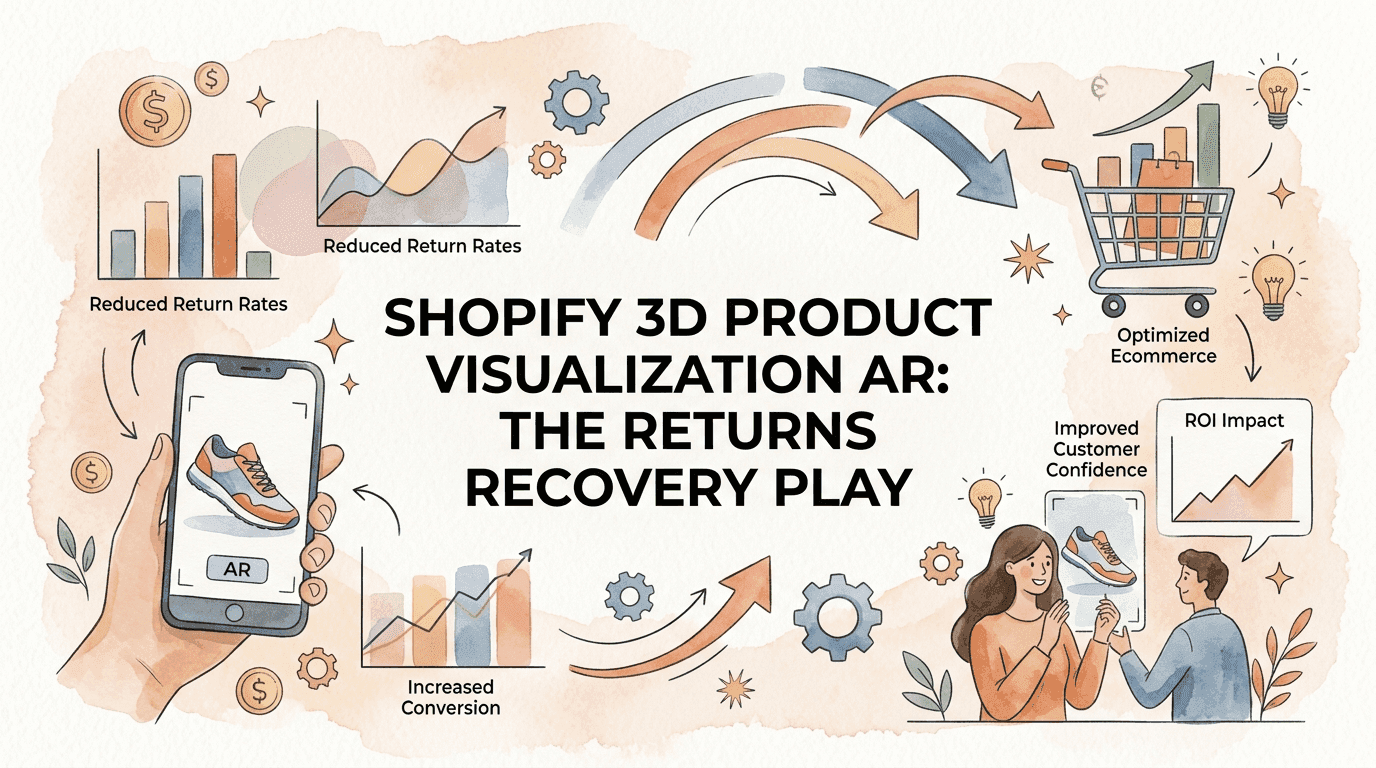
Shopify 3D Product Visualization AR: The Returns Recovery Play
A $3M Shopify furniture brand running 16 SKUs across sectionals, accent chairs, and a small line of solid-oak dining tables sits on an 18 percent return rate. The CFO calls it a fixed cost of selling furniture online.
Margin-First AB Testing Tools for Shopify Operators
Most Shopify operators between $1M and $10M run an AB testing program that feels productive and changes nothing.
The Shopify Accounting Sync Guide That Reconciles Cleanly
Most Shopify operators between $1M and $10M in revenue close the books the same way every month. A bookkeeper opens QuickBooks Online or Xero, runs the bank rec, and quietly absorbs whatever the clearing account refuses to balance.
Advanced Reporting Solutions for Shopify Operators
Most Shopify operators between $1M and $10M in revenue sit on a dashboard graveyard.
Affiliate Program Management: The Hidden Margin Drain
Most Shopify operators look at their affiliate program report, see a column called "revenue attributed," and assume that number is real growth. It is not.
Analytics Reporting Stack Setup: Decisions Over Dashboards
It is 9:14 on a Monday morning. You have three browser tabs open: Shopify Analytics, GA4, and Meta Ads Manager. Each one shows a different revenue number for last week. Shopify says $84,200. GA4 says $71,640.
API Connection Best Practices for Resilient Shopify Stores
The Shopify Admin API ships a new version every quarter. The oldest of the four supported versions sunsets on a fixed schedule.
B2B Functionality Rollout: A Credit-First Playbook
The wholesale channel quietly turns into the most expensive credit product on your P&L the moment you switch on Shopify's B2B feature set without a credit gate underneath it. You think you are signing up retailers.
Cart Abandonment Solutions That Recover 25% of Lost Carts
Most Shopify operators run a single Klaviyo flow against an abandoned cart and call the work finished.
Checkout Improvement Tactics That Beat the App Pile-On
Roughly seven out of ten online retail orders are abandoned before purchase.
CRM Sync Best Practices for Shopify Operators at Scale
The pitch sounds reasonable. Install Klaviyo in fifteen minutes. Connect HubSpot through the official app. Watch the customer records flow in. Platform vendors put this on their landing pages because it tests well in demos.
Custom App Development Guide for Shopify Brands
A $100,000 custom Shopify app does not cost $100,000. It costs about $117,500 in year one, $135,000 by month thirty, and somewhere north of $200,000 by the time it reaches its third birthday.
Customer Service Apps for Shopify: Build to Deflect, Not Absorb
Your support team is measuring tickets handled. Your software vendor is invoicing you per ticket. Both numbers look healthy. Both are signals that your stack is broken.
Email Marketing Best Practices for Shopify Stores
The two-click install is the most expensive button in your Shopify admin. You connect Klaviyo, click "I agree," and walk away believing the data pipe is solved. Six months later, your email revenue per subscriber is half what your peer brands report.
Enterprise Shopify Setup: Why $7M Brands Burn Plus Fees
Most brands sign the Shopify Plus contract two years too late, then keep the same theme, the same checkout, and the same app stack they ran on the Advanced plan. The badge changes. The architecture does not.
Essential Shopify Apps for 1M Brands: An Audit Playbook
The average Shopify store running $1M to $5M in revenue carries between 12 and 15 installed apps. Delete four of them and mobile conversions tend to climb between 11% and 18%.
Headless Commerce Rollout: The Three-Gate Test
Most Shopify operators under $10 million in revenue spend $80,000 on a Hydrogen rebuild to fix a problem that a single afternoon with PageSpeed Insights would have diagnosed as a 15-app bloat issue.

International Market Setup For Shopify Brands That Convert
Roughly a third of cross-border shoppers will abandon a cart presented only in U.S.
Inventory Management Apps Comparison for Shopify Operators
On 31 August 2026, Stocky stops working. Forecasting and stock transfers were already disabled in July 2025.
Loyalty Program Wiring: The Four Sync Layers
Most Shopify operators between $1M and $10M install Smile.io or Yotpo Loyalty in an afternoon, switch on points-for-purchase, drop a balance widget on the account page, and call the work done.
Marketing Automation Setup: The Six-Rung Revenue Ladder
Most Shopify operators in the $1M to $10M revenue band installed Klaviyo, switched on the welcome series, built a single abandoned cart flow, and stopped. Their dashboard says email contributes 22% of revenue. Flows contribute 18% of email.
Mobile Performance Tuning for Shopify Stores
Most Shopify operators run a contradiction every single day. They allocate the majority of their paid media budget to Meta, TikTok, and Instagram, three platforms where every customer is scrolling on a five-inch screen.
Multi-Currency Setup Optimization for Shopify Stores
Your Shopify store just got its first wave of UK orders. A milestone. You flipped on Shopify Markets, enabled auto-conversion, and watched the GBP prices populate. Then you checked what your customers actually see: GBP 87.34 for a product you sell at AUD 139.
Multi-Store Management Without the Fragmentation Tax
A Brisbane-based home goods brand we'll call Stoneline crossed $5M in revenue last year by adding two regional Shopify stores. One for the United Kingdom. One for the United States. The Australian flagship stayed where it was. On paper, three storefronts.
Page Speed Tuning for Shopify Stores
Your Shopify admin shows a speed score of 62. Last quarter it was 48. The dashboard graph is trending up and to the right. Your head of eCom slacks the team a celebration.
Payment Gateway Tuning for Shopify Operators
Most Shopify operators can recite their blended ROAS to two decimal places. Ask the same operator what their blended effective payment processing rate is, and you get a shrug, a "2.9% I think," or a number from a contract they signed three years ago.
Performance Monitoring Tools That Catch Revenue Leaks Early
The most expensive habit on a Shopify operations team is opening Lighthouse, taking a screenshot of the score, and pinning it to Slack.
Why Shopify Returns Management Apps Beat Cash Refunds
The 2025 ecommerce return curve broke a number most operators still have not seen. Industry tracking now puts the average return rate at 24.5 percent of online orders, with apparel, footwear and home categories sitting deeper still.
Review Management Solutions That Survive the FTC 2024 Rule
The Federal Trade Commission's Consumer Reviews and Testimonials Rule went into effect on October 21, 2024.
The Search Filter Tuning Playbook for Shopify Stores
Most Shopify operators treat the search bar as a feature they ticked off in 2021. They install Boost AI or Searchanise, accept the default settings, set the theme-level collection filters, and never look at the query log again.
Shipping Fulfillment App Selection: The Tier Decision Model
Most Shopify operators pick a shipping app the same way they pick a coffee shop: whichever one has the most reviews and looks busy.
Shopify Audiences Prospecting Beats Meta Lookalikes
Shopify Plus merchants spending $5,000 or more a month on Meta prospecting are sitting on a behavioural dataset that out-performs lookalike audiences by margins that should embarrass any growth team.
Shopify Flow Automation: The Operating Engine for Scaling Stores
You walk into the warehouse on a Monday and three of your ops coordinators are still triaging Friday's high-risk orders. One is hunting through the admin tab to manually tag returning VIPs so the email team can pull them into a flash-sale segment.
The Shopify Plus Migration Guide Checklist That Saves SEO
A Perth-based skincare brand, $4M in annual revenue, kicked off a Shopify Plus migration in February last year. Five months of build. A dev agency. Custom theme. New ERP sync. New 3PL feed. Fresh product taxonomy.
Shopify POS Omnichannel Setup: The Three-Layer Playbook
Most Shopify operators with a retail footprint and a DTC site are running two separate businesses on the same brand. Two inventory counts. Two customer files. Two P&Ls that get stitched together once a month in a spreadsheet that nobody trusts.
The Shopify SEO Optimization Complete Guide for Operators
Type this into Google right now: site:yourstore.com/collections/*/products/. Count the results. If you sell fifty products across six collections, you might see three hundred URLs. Every single one is a duplicate of a product page you already have indexed.
The Shopify Theme Tuning Guide That Stops Drift
A Shopify store that launched with a 90+ mobile PageSpeed score and now sits at 60 did not have a speed problem at launch. It had a governance problem.
Social Media on Shopify: A Catalog Sync and CAPI Guide
You ran a Meta campaign last quarter that Shopify reports converted at 1.4 percent. Your email channel converted at 4.8 percent. The lazy explanation is that paid social is a worse channel.
Tax Management Solutions: A 4-Phase Audit-Defence Protocol
A $3M Shopify brand I worked with last year crossed economic nexus in five US states it had never registered in. The owner did not know. His bookkeeper did not know.
Wholesale Portal Setup for Shopify B2B Operators
Most $4M wholesale operators on Shopify are still running their B2B channel through a shared inbox, a Google Sheet of price tiers, and a sales rep who spends a full day each week typing orders out of email threads. That setup was acceptable in 2018.
Ready to put shopify tech stack to work in your business?
Get a hands-on operator to turn these frameworks into results — book a free audit call.