FMCG Growth Strategy: From Retail to DTC Success
The definitive guide for Australian FMCG brands ready to build direct-to-consumer channels that complement retail distribution while creating sustainable competitive advantages
Do You Have an FMCG DTC Problem?
Tick everything that's already true for your business:
If you checked 3 or more boxes, you're experiencing the classic symptoms of the retail dependency crisis. This comprehensive guide provides the proven framework that has helped over 30 Australian FMCG brands successfully launch and scale direct-to-consumer channels that complement retail distribution, increase profit margins by 40-80%, and create sustainable competitive advantages through direct customer relationships.
Why Most FMCG Brands Fail at Direct-to-Consumer
The transition from pure retail distribution to hybrid retail-DTC strategy represents one of the most complex challenges in modern FMCG growth. Industry data shows that 71% of FMCG brands that attempt DTC launch fail to achieve sustainable profitability within 18 months, and 84% never reach more than 15% of total revenue through direct channels. The failure rate in FMCG DTC implementation is particularly acute for established brands with strong retail presence, where channel conflict concerns and operational complexity create significant barriers to success.
This isn't due to lack of market opportunity or brand strength. The primary cause is what we call "retail mindset syndrome" - the fundamental differences between retail distribution and direct-to-consumer operations that require completely different approaches to customer acquisition, fulfillment, pricing, and brand management. FMCG brands excel at wholesale operations, retail relationships, and mass production, but DTC requires mastery of digital marketing, individual order fulfillment, customer service, and direct customer relationship management.
The brands that successfully navigate this transition share common characteristics: they implement systematic approaches to DTC strategy that complement rather than compete with retail channels, maintain rigorous focus on customer acquisition and retention through digital channels, and build scalable operational infrastructure that can handle individual consumer orders profitably. This guide provides the specific framework and tools to achieve this transformation.
Most critically, the customer relationship dynamics are fundamentally different. While retail success depends on buyer relationships and shelf placement, DTC success requires direct consumer marketing, individual customer service, and sophisticated customer lifetime value optimization. The brands that successfully navigate this transition share common characteristics: they implement systematic approaches to customer acquisition, maintain rigorous focus on customer experience and retention, and build scalable technology and operational infrastructure before they desperately need it. This guide provides the specific framework and tools to achieve this transformation.
The FMCG DTC Mastery Framework
After working with over 30 Australian FMCG brands through the direct-to-consumer transformation journey, we've identified seven critical pillars that determine DTC success for established retail brands. This framework, refined through hundreds of implementations and millions in DTC revenue generation, provides the systematic approach necessary for building profitable direct-to-consumer channels that complement retail distribution.
The Seven Pillars of FMCG DTC Mastery
Pillar 1: Channel Strategy & Retail Harmony
Strategic development of direct-to-consumer channels that complement and enhance retail relationships rather than creating conflict. This includes pricing strategies, product differentiation, and channel-specific value propositions that benefit both retail partners and direct customers.
Pillar 2: Customer Acquisition & Digital Marketing
Comprehensive digital marketing strategies specifically designed for FMCG brands transitioning to DTC, including customer acquisition across multiple channels, brand awareness building, and FMCG Digital Marketing Strategy that drives sustainable customer acquisition.
Pillar 3: Customer Data & Insights Infrastructure
Advanced customer data collection and analysis capabilities that provide insights unavailable through retail channels. This includes customer behavior analysis, purchase pattern identification, and FMCG Customer Analytics that enable data-driven decision making.
Pillar 4: Product Strategy & Innovation
Strategic product development and portfolio management that leverages direct customer insights and enables testing of new products and variations. This includes DTC Product Strategy for FMCG and innovation processes that reduce risk and accelerate time-to-market.
Pillar 5: Operations & Fulfillment Excellence
Sophisticated operations and fulfillment capabilities designed for individual consumer orders rather than bulk retail shipments. This includes FMCG DTC Fulfillment Strategy and operational excellence that maintains profitability at individual order level.
Pillar 6: Customer Experience & Retention
Comprehensive customer experience design and retention strategies that build direct relationships and maximize customer lifetime value. This includes FMCG Customer Retention Strategy and experience optimization across all touchpoints.
Pillar 7: Financial Management & Profitability
Advanced financial management specifically designed for hybrid retail-DTC operations, including unit economics optimization, channel profitability analysis, and FMCG DTC Financial Management that ensures sustainable profitability across all channels.
The DTC Readiness Assessment
Before implementing specific DTC strategies, it's essential to assess your current capabilities and market position across each pillar. Our proprietary DTC Readiness Assessment evaluates 42 specific criteria across the seven pillars, providing a comprehensive baseline and prioritized implementation roadmap.
The assessment reveals that most FMCG brands attempting DTC transformation have significant gaps in 4-6 pillars, with customer acquisition and operations fulfillment being the most common weak points. Brands that address these gaps systematically before launching DTC channels achieve 3x higher success rates and 50% faster path to profitability.
Key Statistics from Our Assessment Database:
- 71% of FMCG brands lack comprehensive digital marketing and customer acquisition capabilities
- 84% don't have adequate customer data collection and analysis infrastructure
- 67% haven't developed channel strategies that avoid retail conflict
- 79% lack operations and fulfillment capabilities for individual consumer orders
- 73% don't have proper customer experience and retention strategies
- 88% lack financial management systems designed for hybrid retail-DTC operations
- 76% haven't developed product strategies that leverage direct customer insights
These statistics represent predictable failure points during the DTC transformation process. The brands that successfully navigate this transition share common characteristics: they implement systematic approaches to each pillar, maintain rigorous focus on retail relationship preservation, and build scalable DTC infrastructure before they desperately need it. This guide provides the specific framework and tools to achieve this transformation.
Phase 1: DTC Foundation Building (Retail Revenue $2M-$10M)
The foundation phase focuses on establishing the core capabilities necessary to support direct-to-consumer operations while maintaining and strengthening retail relationships. This phase typically takes 4-8 months and requires disciplined execution across multiple strategic and operational areas simultaneously.
Channel Strategy Development
The most critical element of FMCG DTC foundation building is developing a comprehensive channel strategy that creates value for both retail partners and direct customers without creating destructive competition. At this stage, many FMCG brands make the mistake of simply replicating their retail offering online, which creates channel conflict and fails to leverage the unique advantages of direct-to-consumer relationships.
Retail Harmony Strategy
Develop systematic approaches to DTC that enhance rather than compete with retail relationships. This includes differentiated product offerings, complementary pricing strategies, and value-added services that benefit retail partners while creating direct customer value.
The retail harmony strategy should include Retail Partner Communication, differentiated product positioning, complementary channel strategies, and systematic approaches to maintaining and strengthening retail relationships while building direct channels.
Channel-Specific Value Propositions
Create distinct value propositions for direct customers that don't undermine retail positioning. This includes exclusive products, subscription services, educational content, and personalized experiences that justify direct purchasing while maintaining retail channel value.
The value proposition development should include exclusive product development, subscription and convenience services, educational content creation, and FMCG Brand Differentiation strategies that create unique value for direct customers.
Pricing Strategy & Conflict Avoidance
Implement sophisticated pricing strategies that maintain retail relationships while enabling profitable direct sales. This includes premium positioning, bundle strategies, and value-added services that justify pricing differences without undercutting retail partners.
The pricing strategy should include retail price maintenance, premium positioning development, bundle and kit strategies, and FMCG Pricing Strategy for DTC that maintains channel harmony while enabling profitability.
Digital Marketing Foundation
Brand Awareness & Customer Acquisition
Develop comprehensive digital marketing capabilities specifically designed for FMCG brands, including content marketing, social media strategy, influencer partnerships, and paid advertising that builds brand awareness and drives customer acquisition.
The digital marketing foundation should include content marketing strategy, social media presence development, influencer partnership programs, and FMCG Content Marketing that builds brand awareness and drives customer acquisition without competing with retail partners.
Customer Data Collection Infrastructure
Implement systematic customer data collection capabilities that provide insights unavailable through retail channels. This includes website analytics, customer behavior tracking, email marketing, and customer feedback systems that enable data-driven decision making.
The data collection infrastructure should include website analytics implementation, customer behavior tracking, email marketing platform setup, and FMCG Customer Data Strategy that provides comprehensive customer insights for optimization and innovation.
Operations & Fulfillment Setup
Individual Order Fulfillment
Develop operations and fulfillment capabilities designed for individual consumer orders rather than bulk retail shipments. This requires completely different approaches to inventory management, packaging, shipping, and customer service than traditional wholesale operations.
The fulfillment setup should include individual order processing systems, consumer packaging development, shipping partner selection, and FMCG Order Fulfillment capabilities that maintain profitability and customer satisfaction at individual order level.
Inventory Management for DTC
Implement inventory management systems that can handle both bulk retail orders and individual consumer orders while maintaining optimal stock levels and minimizing carrying costs. This dual-channel inventory management requires sophisticated forecasting and allocation strategies.
The inventory management should include dual-channel forecasting, inventory allocation strategies, stock level optimization, and Dual-Channel Inventory Management that maintains efficiency and profitability across both retail and DTC channels.
Customer Experience Foundation
Website & eCommerce Platform
Develop professional eCommerce website and platform capabilities that provide excellent customer experiences while reflecting brand values and quality. This includes user experience design, mobile optimization, and conversion optimization specifically for FMCG products.
The eCommerce platform should include user experience optimization, mobile responsiveness, conversion optimization, and FMCG eCommerce Platform that provides excellent customer experiences and drives conversion.
Customer Service & Support
Implement customer service and support capabilities designed for direct consumer relationships. This includes customer service training, support systems, return and refund policies, and customer communication strategies that build loyalty and satisfaction.
The customer service setup should include support system implementation, team training programs, policy development, and FMCG Customer Service that builds strong direct customer relationships and maximizes satisfaction.
Phase 2: DTC Growth & Optimization (DTC Revenue $500K-$3M)
The growth phase focuses on systematically scaling direct-to-consumer operations while optimizing performance across all channels and maintaining retail relationship strength. This phase typically takes 8-18 months and requires significant investment in marketing, operations, and customer experience capabilities.
Advanced Customer Acquisition
Multi-Channel Digital Marketing
Implement sophisticated digital marketing strategies across multiple channels including social media advertising, Google advertising, content marketing, influencer partnerships, and email marketing. This comprehensive approach enables sustainable customer acquisition and brand building.
The multi-channel marketing should include Advanced FMCG Digital Advertising, social media strategy optimization, content marketing scaling, influencer partnership expansion, and email marketing automation that drives consistent customer acquisition and retention.
Customer Acquisition Cost Optimization
Develop systematic approaches to customer acquisition cost optimization including channel performance analysis, lifetime value optimization, and attribution modeling. This optimization enables sustainable growth while maintaining profitability across all acquisition channels.
The CAC optimization should include channel performance analysis, customer lifetime value modeling, attribution analysis, and FMCG Customer Acquisition Optimization that maximizes acquisition efficiency and long-term profitability.
Product Strategy & Innovation
DTC-Exclusive Product Development
Leverage direct customer insights and feedback to develop products specifically for direct-to-consumer channels. This includes limited editions, customization options, subscription products, and innovation testing that creates unique value for direct customers.
The product development should include customer insight analysis, exclusive product creation, customization capabilities, and FMCG Product Innovation for DTC that creates competitive advantages and customer loyalty through unique offerings.
Subscription & Recurring Revenue
Implement subscription and recurring revenue models that increase customer lifetime value and create predictable revenue streams. This includes subscription box services, auto-replenishment programs, and membership models that enhance customer convenience and brand loyalty.
The subscription strategy should include subscription model development, auto-replenishment systems, membership program creation, and FMCG Subscription Strategy that increases customer lifetime value and creates predictable revenue growth.
Customer Experience Optimization
Personalization & Customer Journey
Develop sophisticated personalization and customer journey optimization that leverages direct customer data to create individualized experiences. This includes personalized product recommendations, customized communications, and tailored customer experiences.
The personalization strategy should include customer data analysis, personalized recommendation engines, customized communication strategies, and FMCG Customer Journey Optimization that increases conversion rates and customer satisfaction.
Customer Retention & Loyalty Programs
Implement comprehensive customer retention and loyalty programs that maximize customer lifetime value and create strong brand relationships. This includes loyalty point systems, exclusive member benefits, and retention marketing campaigns.
The retention strategy should include loyalty program development, exclusive benefit creation, retention marketing automation, and FMCG Customer Loyalty Programs that maximize customer lifetime value and brand advocacy.
Operations Scaling
Advanced Fulfillment & Logistics
Scale operations and fulfillment capabilities to handle increased order volumes while maintaining efficiency and customer satisfaction. This includes automation implementation, logistics optimization, and quality control systems that ensure excellent customer experiences.
The operations scaling should include fulfillment automation, logistics optimization, quality control systems, and FMCG Fulfillment Scaling that maintains efficiency and customer satisfaction as order volumes increase.
Supply Chain Integration
Integrate direct-to-consumer operations with existing supply chain and manufacturing capabilities to optimize efficiency and reduce costs. This includes demand forecasting, production planning, and inventory optimization across all channels.
The supply chain integration should include demand forecasting optimization, production planning coordination, inventory optimization, and FMCG Supply Chain Integration that maximizes efficiency and profitability across all channels.
Channel Optimization & Expansion
Retail Relationship Enhancement
Use direct customer insights and data to enhance retail relationships and create additional value for retail partners. This includes customer insight sharing, co-marketing opportunities, and collaborative product development that strengthens retail partnerships.
The retail enhancement should include insight sharing programs, co-marketing initiatives, collaborative development projects, and Retail Partnership Enhancement that creates mutual value and strengthens channel relationships.
Multi-Channel Customer Experience
Develop integrated customer experiences that seamlessly connect direct and retail channels. This includes omnichannel customer service, unified loyalty programs, and consistent brand experiences across all touchpoints.
The multi-channel experience should include omnichannel customer service, unified loyalty systems, consistent brand experiences, and FMCG Omnichannel Strategy that creates seamless customer experiences across all channels.
Advanced Analytics & Optimization
Customer Lifetime Value Optimization
Implement sophisticated customer lifetime value analysis and optimization strategies that maximize long-term profitability and guide acquisition and retention investments. This includes cohort analysis, predictive modeling, and strategic customer segmentation.
The CLV optimization should include cohort analysis implementation, predictive modeling development, customer segmentation strategies, and FMCG Customer Lifetime Value that maximizes long-term profitability and guides strategic decision making.
Performance Analytics & Reporting
Develop comprehensive analytics and reporting capabilities that provide insights into all aspects of DTC performance including customer acquisition, retention, profitability, and operational efficiency. This enables data-driven optimization and strategic planning.
The analytics implementation should include performance dashboard development, automated reporting systems, insight generation capabilities, and FMCG DTC Analytics that enable continuous optimization and strategic decision making.
Phase 3: DTC Scale & Innovation (DTC Revenue $3M+ Revenue)
The scale phase focuses on advanced strategies that can handle complex, high-volume DTC operations while maintaining profitability and enabling strategic innovation. This phase requires sophisticated operational infrastructure and advanced strategic approaches to customer acquisition, retention, and channel management.
Advanced Customer Acquisition & Retention
Predictive Customer Analytics
Implement artificial intelligence and machine learning systems that can predict customer behavior, optimize acquisition strategies, and automate retention campaigns. This includes predictive lifetime value modeling, churn prediction, and automated customer journey optimization.
The predictive analytics should include AI-Powered FMCG Customer Analytics, machine learning customer models, automated optimization systems, and intelligent customer journey management that maximizes acquisition efficiency and retention rates.
Advanced Personalization Engine
Develop sophisticated personalization capabilities that deliver individualized experiences across all customer touchpoints based on comprehensive customer data and behavioral analysis. This personalization increases conversion rates, customer satisfaction, and lifetime value.
The personalization engine should include behavioral analysis, dynamic content delivery, personalized product recommendations, and Advanced FMCG Personalization that delivers relevant experiences at scale across all customer touchpoints.
Strategic Product Innovation
Customer-Driven Product Development
Leverage comprehensive direct customer insights to drive product innovation and development strategies. This includes customer feedback analysis, demand prediction, and rapid product testing that reduces development risk and accelerates time-to-market.
The product innovation should include customer insight analysis, demand forecasting, rapid testing capabilities, and Customer-Driven FMCG Innovation that creates products with validated market demand and competitive advantages.
Market Expansion & New Categories
Use direct customer relationships and data to identify and enter new product categories and market segments. This expansion leverages existing customer relationships and brand equity to drive growth into adjacent markets.
The market expansion should include customer analysis for new opportunities, category expansion strategies, brand extension planning, and FMCG Market Expansion Strategy that leverages existing customer relationships for growth into new markets.
Advanced Operations & Technology
Enterprise-Level Operations
Implement enterprise-level operations and fulfillment capabilities that can handle high-volume, complex operations while maintaining efficiency and customer satisfaction. This includes advanced automation, quality management, and scalability planning.
The enterprise operations should include advanced automation systems, quality management programs, scalability planning, and Enterprise FMCG Operations that maintain efficiency and quality at scale while supporting continued growth.
Advanced Technology Integration
Develop sophisticated technology integration that connects all business systems and enables comprehensive business intelligence and optimization. This includes ERP integration, advanced analytics, and automated decision-making systems.
The technology integration should include ERP system integration, advanced analytics platforms, automated optimization systems, and FMCG Technology Integration that enables comprehensive business intelligence and automated optimization.
Strategic Channel Management
International Expansion
Develop international expansion strategies that leverage direct-to-consumer capabilities to enter new geographic markets. This includes market analysis, localization strategies, and international operations development.
The international expansion should include market opportunity analysis, localization strategies, international operations setup, and FMCG International Expansion that leverages DTC capabilities for geographic growth and market diversification.
Strategic Partnership Development
Create strategic partnerships that enhance DTC capabilities and create new growth opportunities. This includes technology partnerships, distribution partnerships, and co-marketing relationships that accelerate growth and capabilities.
The partnership development should include strategic partnership identification, relationship development, collaboration frameworks, and FMCG Strategic Partnerships that enhance capabilities and accelerate growth through collaborative relationships.
Critical Success Factors for FMCG DTC Mastery
Retail Relationship Management
The foundation of successful FMCG DTC transformation is maintaining and strengthening retail relationships while building direct channels. Many brands create channel conflict that damages retail relationships and limits overall growth potential.
The retail relationship management should prioritize communication, collaboration, and mutual value creation. The DTC strategy should be designed to enhance rather than compete with retail channels while creating unique value for direct customers.
Customer-Centric Approach
FMCG DTC success requires fundamental shift from product-centric to customer-centric thinking and operations. This includes understanding individual customer needs, preferences, and behaviors rather than just aggregate market trends and retail buyer requirements.
The customer-centric approach should include comprehensive customer data collection, individual customer experience optimization, and systematic customer feedback integration into all business decisions and product development processes.
Operational Excellence
Direct-to-consumer operations require completely different capabilities than wholesale operations, including individual order fulfillment, customer service, and quality management at individual customer level rather than bulk shipment level.
The operational excellence should include individual order processing efficiency, customer service excellence, and quality management systems that maintain high standards while handling individual consumer orders profitably and efficiently.
Financial Discipline & Unit Economics
FMCG DTC success requires rigorous financial management and unit economics optimization that considers the different cost structures and profitability requirements of direct-to-consumer operations compared to wholesale operations.
The financial discipline should include comprehensive unit economics analysis, customer acquisition cost optimization, lifetime value maximization, and systematic profitability management across all channels and customer segments.
Continuous Innovation & Adaptation
The direct-to-consumer landscape evolves rapidly, requiring continuous innovation and adaptation of strategies, technologies, and operations. Brands that treat DTC as a static channel rather than a dynamic capability typically see performance plateau over time.
The innovation approach should include continuous testing of new strategies, regular optimization of existing processes, and systematic adaptation to market changes and customer evolution. This ongoing innovation ensures that DTC capabilities continue to drive growth and competitive advantage over time.
Success Stories: FMCG DTC Transformation Results
Case Study 1: Australian Health & Wellness Brand - DTC Revenue Breakthrough
Challenge: This Melbourne-based health supplement brand was generating $8M annually through retail but had no direct customer relationships or data. Retail margins were being squeezed and they wanted to test new products without major retail commitments.
Solution: Implemented comprehensive DTC strategy including subscription services, exclusive products, and educational content marketing. Developed retail harmony strategy that enhanced rather than competed with existing retail relationships.
Results:
- Achieved $2.4M in DTC revenue within 18 months (30% of total revenue)
- Increased overall profit margins by 67% through higher-margin DTC sales
- Launched 6 new products through DTC testing before retail rollout
- Strengthened retail relationships through customer insight sharing
Case Study 2: Food & Beverage Brand - Subscription Success
Challenge: This Sydney-based specialty food brand was dependent on gourmet retail stores with limited growth potential. They wanted to build direct relationships and create recurring revenue streams while maintaining retail partnerships.
Solution: Developed subscription box service with exclusive products and educational content. Implemented sophisticated customer acquisition strategy and retention programs that maximized customer lifetime value.
Results:
- Built 8,500 active subscribers generating $1.8M annual recurring revenue
- Increased customer lifetime value by 340% through subscription model
- Improved retail relationships through exclusive retail-only products
- Achieved 89% customer retention rate through superior customer experience
Case Study 3: Personal Care Brand - Market Expansion Success
Challenge: This Perth-based personal care brand had strong retail presence in Western Australia but wanted to expand nationally without major retail distribution investments. They needed direct customer acquisition capabilities.
Solution: Implemented national DTC strategy that enabled market expansion without retail distribution. Developed sophisticated digital marketing and customer acquisition capabilities for national reach.
Results:
- Expanded to national market with $3.2M DTC revenue across Australia
- Reduced customer acquisition costs by 52% through optimization
- Achieved 156% increase in brand awareness through direct marketing
- Used DTC success to secure national retail distribution partnerships
Next Steps: Implementing FMCG DTC Strategy
Immediate Actions (Next 30 Days)
Complete DTC Readiness Assessment
Take our comprehensive assessment to evaluate your current capabilities and identify the most important areas for development.
Analyze Retail Relationships
Evaluate your current retail relationships and identify strategies to enhance rather than compete with existing partnerships.
Assess Customer Data Capabilities
Review your current customer data collection and analysis capabilities to identify gaps that need to be addressed for DTC success.
Short-Term Implementation (30-120 Days)
Develop Channel Strategy
Create comprehensive channel strategy that defines how DTC will complement retail while creating unique value for direct customers.
Build Digital Marketing Foundation
Implement essential digital marketing capabilities including website, content marketing, and customer acquisition systems.
Establish Operations Capabilities
Develop basic operations and fulfillment capabilities for individual consumer orders while maintaining retail operations efficiency.
Long-Term Strategy (4-18 Months)
Scale Customer Acquisition
Implement sophisticated customer acquisition strategies across multiple digital channels with systematic optimization and scaling.
Develop Advanced Capabilities
Build advanced capabilities including subscription services, personalization, and customer retention programs that maximize lifetime value.
Optimize Channel Integration
Create seamless integration between DTC and retail channels that enhances overall customer experience and business performance.
41 guides on fmcg strategy
Brand Extension Planning That Doesn't Dilute Parent Equity
Most brand extensions in fast-moving consumer goods fail.
Brand Health Monitoring: The Weekly Pulse That Beats Trackers
Most consumer-goods operators pay for brand-health data on the wrong calendar. The annual tracker arrives in March, the boardroom reads it in April, and the share loss it described started last October.
Category Captain Strategies for Challenger Brands
A $25M Australian soft-drink brand spent eighteen months chasing category-advisor status at Woolworths. They got it. The CFO opened a champagne bottle the day the appointment letter arrived.
Category Management for FMCG Brands
Most FMCG brands approach category management the same way they approach tax returns: once a year, with minimal effort, and mostly to keep someone else happy. The retailer sends a template.
Competitive Intelligence for Consumer Goods That Predicts Share
The Australian sauces brand had been running a clean dashboard for eighteen months. Brandwatch tracked sentiment across the category. Meltwater measured share-of-voice against the two largest competitors.
Consumer Insights Analytics That Drive Category Action
Walk into the average $5M-$10M FMCG brand on a Tuesday morning and the scene repeats. An analyst rebuilds a 12-tab Power BI workbook nobody outside their team has opened in three weeks.
Consumer Promotion Strategies That Stop Burning Margin
Most consumer promotion calendars run on a single, dangerous assumption: if redemption is up, the promotion worked.
Cross-Merchandising Strategies That Actually Lift Basket Size
Most secondary placements in Australian and US grocery do not earn back the trade dollars sitting underneath them.
Building Customer Data for FMCG Brands From Scratch
The category manager at a $40M Australian snack brand once told me he had "great customer data." He pulled up a Nielsen panel report. Twelve slides of category share, household penetration, and weighted distribution. Not a single email address.
Demand Forecasting for FMCG That Beats the 60% Wall
The forecast accuracy ceiling for fast-moving consumer goods has not moved in twenty years. Most $1M-$10M FMCG operators run their statistical forecast off retailer shipment history, then quietly accept a MAPE in the 50s and 60s as the cost of doing business.
Why Traditional Brands Get Their Digital Strategy Backwards
Most traditional FMCG brands run their digital pivot in the wrong order. They hire a Chief Digital Officer, sign a 36-month martech deal, stand up a Shopify store, and only then notice that none of it knows who their customers are.
Direct-to-Consumer for FMCG Brands: The Intelligence Play
The CFO who kills your direct-to-consumer channel was technically correct.
Distribution Strategy for Consumer Brands: The Gap Protocol
A $4M snack brand hit its number last year by adding 600 new retail accounts. The founder was proud of the door count until the January review landed on her desk. Depletion per store was down 22%.
FMCG Brand Positioning Framework: Why 76% of Launches Fail
Grocery buyers are quietly delisting the slowest-moving 15% of SKUs in their categories this quarter. Coles, Woolworths, and the independents have all tightened their range reviews.
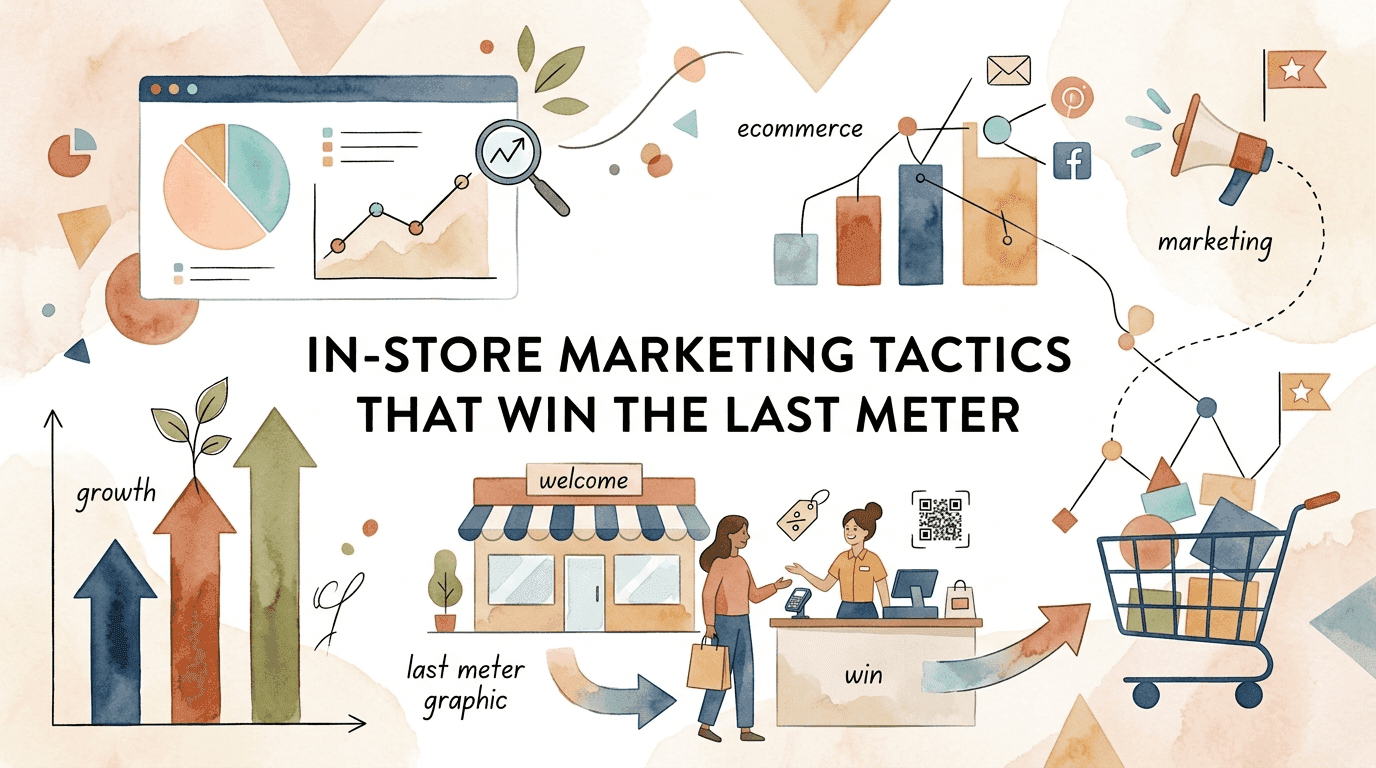
In-Store Marketing Tactics That Win the Last Meter
The average $1M to $10M FMCG operator spends north of 70% of marketing budget on the part of the customer journey that happens before the shopper enters the store. TV spots, programmatic display, social ads, influencer drops, mailer flyers.
Innovation Pipeline Management for FMCG Operators
Most FMCG brands run a five-stage product development process that is optimised to survive a category review meeting at Coles or Woolworths, not to test whether shoppers actually want the product.
Line Extension Strategies That Don't Destroy Parent Margin
It is a Tuesday morning NPI meeting at a $40M Australian snack brand. The brand director presents Smoky Maple, a new flavour extension to the flagship original chip. Year-one revenue projection: $2.8M. The major grocer's buying team is enthusiastic.
Loyalty Programs for Consumer Goods That Actually Move Profit
Most FMCG operators run loyalty programs that reward the customer who would have bought anyway.
Market Research For FMCG: The Shelf-Reality Research Protocol
You signed a five-to-six figure annual contract with a syndicated data provider, and you believe you bought the truth about your category. You did not.
Fixing the New Product Introduction Process for FMCG Brands
Most FMCG operators run a new product introduction process that has not been tested by a single paying consumer before it hits a retail buyer's desk. The brand team builds the deck. The category manager nods. A purchase order arrives.
Omnichannel Strategy for Consumer Goods That Survives Year One
A composite Australian beverage brand sat in 12,000 retail doors. Coles, Woolworths, IGA, hundreds of independents, two airlines, the airport convenience network. Annual revenue around $48M. Margins thin but stable.
Packaging Optimization for Shelf Appeal
Your packaging is the most expensive sales asset your brand owns, and you have never tested whether it actually works.
Planogram Optimization Strategies for Growing CPG Brands
Most emerging CPG brands treat their planogram like an inheritance. The retailer hands you a placement, you thank them, you print a photo for the team Slack, and you move on.
Point of Purchase Displays: Stop Shipping Into Black Holes
You think your display program is working because the truck left the warehouse on time. The pallets shipped, the broker network got paid, and the trade-spend line item closed out cleanly. Your dashboard says green.
Price Elasticity Analysis: The Pack-Tier Discipline
A $30M Australian shelf-stable food brand raised the price on its 250g jar by 8% on a Tuesday morning in March.
Pricing Strategy for Fast Moving Goods That Actually Holds
CPG shelf prices rose 32.3% between 2019 and mid-2024. Volume growth barely reached 3.4%. Sixty-five percent of the top 46 FMCG companies missed revenue expectations as shoppers traded down, bought smaller packs, or walked to private label.
The Private Label Competition Analysis Most Brands Skip
Private label sales hit $271 billion in the US in 2024, growing 3.9% against national brands' 1.0%. Ninety-nine point nine percent of US households now buy store brands. That is not a blip. That is a category shift.
Product Launch Framework for FMCG Brands
A mid-market Australian skincare brand came to me last year after what they called their "worst financial quarter in seven years." They had launched six new SKUs into Chemist Warehouse and two independent grocery chains.
Product Portfolio Optimisation for FMCG Margin Recovery
A founder I worked with last year ran an Australian challenger coffee brand doing $5.4M in revenue across grocery and DTC. Topline was up 22% year on year. The board deck looked great. Six quarters earlier the portfolio held 41 SKUs.
Quality Control for Fast Moving Products in DTC
Most FMCG brands run quality control on their direct-to-consumer parcels using a sampling regime designed for pallet shipments to a buyer's QA team in 1987. The math worked then. It does not work now.
Regulatory Compliance for Consumer Goods Brands Selling DTC
The brand I will call Veracity Wellness sold $4 million worth of magnesium and probiotic powders through Chemist Warehouse and Priceline before they ever ran a paid ad to their own website.
Retail Channel Strategy for Consumer Goods That Protects Your Margin
A composite example, drawn from three consumer goods brands I have worked with in the last two years. Change the product category to candles, pet food, or supplements and the pattern repeats. The numbers are representative. The mistake is identical.
The Retailer Relationship Management Playbook
The biggest brands in your category are not winning at the negotiation table. They are winning in the 50 weeks between negotiations, while you are still preparing your 90-slide joint business planning deck for a buyer meeting that will last 30 minutes.
Sampling Campaign Management That Survives Past Day One
Most FMCG operators run sampling programmes the same way they did in 2008. They book a demo table, ship a pallet of mailer samples, count the units that walked out the door, watch the day-of register lift, and call it a win.
Seasonal Display Planning on a 14-Week Runway
Most FMCG brand teams build a Halloween display calendar that ends on October 31. The buyer at Coles built one that ends on October 17, because the next reset crew is already scheduled to pull pumpkins and push Christmas tinsel.
Seasonal Planning for Consumer Goods
Most consumer goods brands approach seasonal planning the same way every year. They pull last year's numbers, add a percentage bump based on gut feel, and call it a forecast.
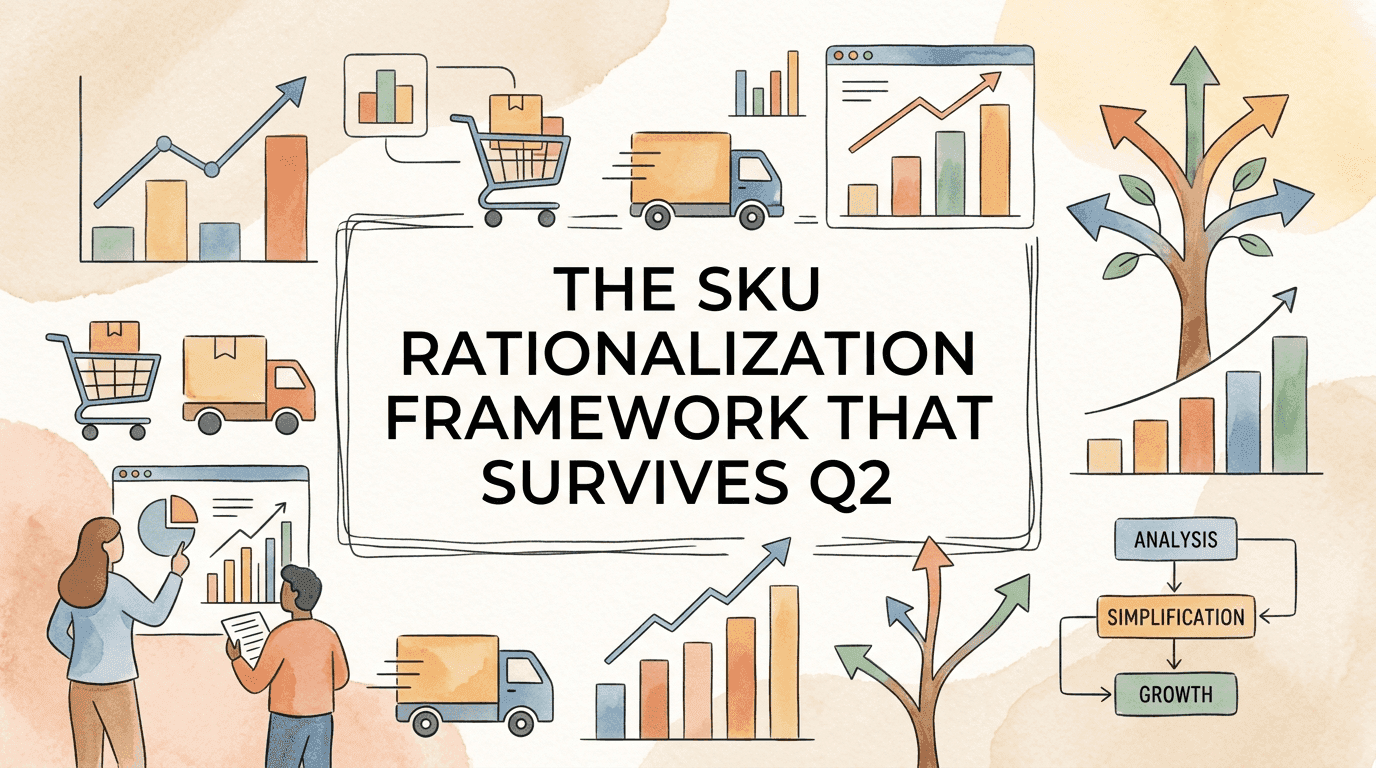
The SKU Rationalization Framework That Survives Q2
Every FMCG operator has sat in this meeting. Once a year, a conference room fills up with brand managers, a finance lead, and someone from supply. A spreadsheet appears. Each brand manager defends their SKUs in turn.
Your Supply Chain for Consumer Goods Is Killing DTC Margin
When an FMCG brand makes the math case for launching DTC, the model usually shows a 20 to 40 percent reclaim of margin lost to retail trade spend, slotting fees, and category buyer leverage.
Sustainability in FMCG: The Parcel-Level Carbon Reckoning
The Australian Competition and Consumer Commission ran an internet sweep in 2022, reviewing 247 businesses across eight sectors. The result, published in 2023, was blunt: 57% of the environmental claims surveyed raised concerns.
Trade Marketing Best Practices That Actually Protect Your Margins
Last financial year, a $4.2 million Australian grocery brand ran 47 trade promotions. They spent $680,000 on co-op fees, temporary price reductions, gondola-end displays, and volume rebates.
Trade Promotion Optimization: The Incremental Lift Audit
Your retailer scan data is lying to you. Or more accurately, you are lying to yourself with it.
Ready to put fmcg strategy to work in your business?
Get a hands-on operator to turn these frameworks into results — book a free audit call.