Exit Strategy Planning for eCommerce: Building a Business Worth Buying
Most founders think about exits when they're burned out or when an unexpected offer arrives. By then, they've made years of decisions that reduce exit options and value. Here's what the data shows: eCommerce M&A deal volume climbed 41% year-over-year in 2024, indicating significant buyer appetite...
8 min read · 26 September 2025
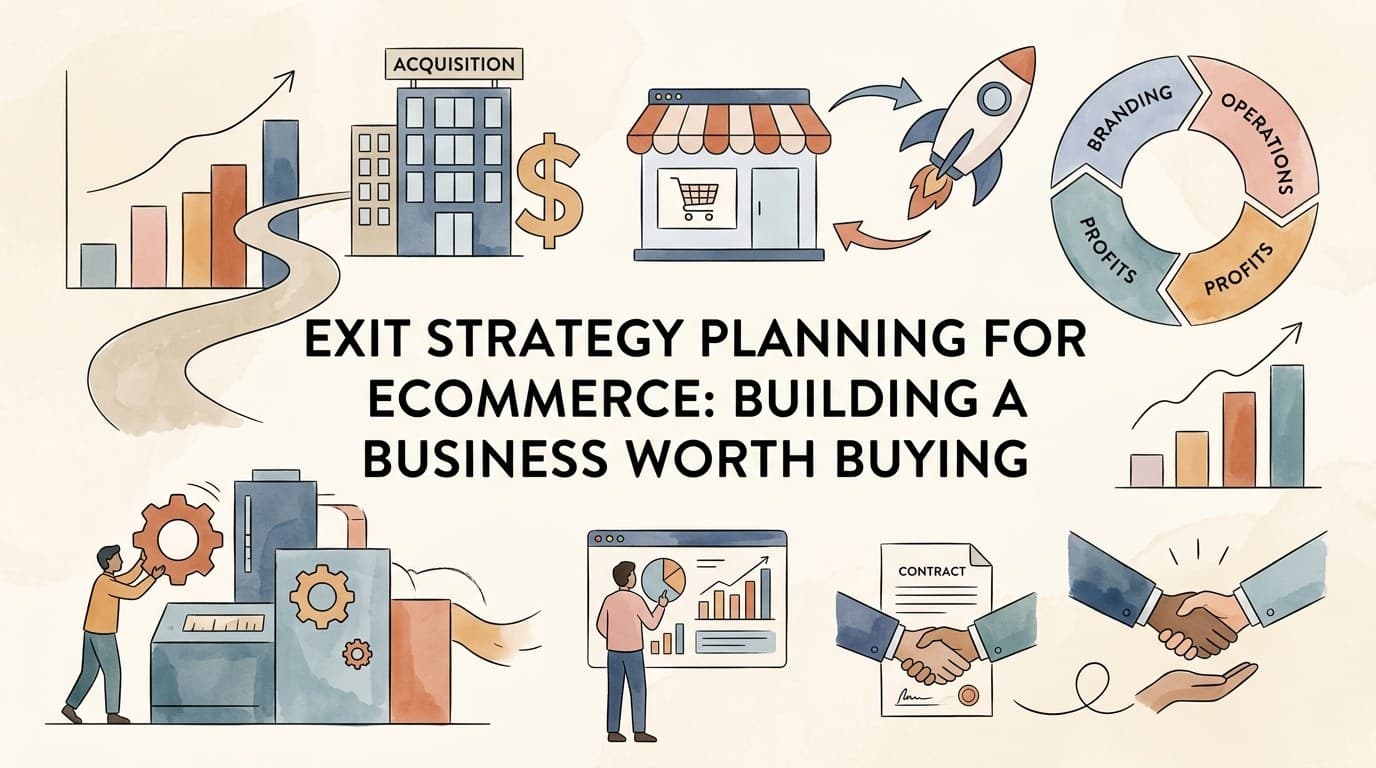
Exit Strategy Planning for eCommerce: Building a Business Worth Buying
Most founders think about exits when they're burned out or when an unexpected offer arrives. By then, they've made years of decisions that reduce exit options and value.
Here's what the data shows: eCommerce M&A deal volume climbed 41% year-over-year in 2024, indicating significant buyer appetite. Yet most sellers leave money on the table because they haven't prepared their businesses for acquisition.
Exit planning isn't about selling your company-it's about building one worth buying. The same attributes that make a company attractive to acquirers make it a better business to run. Strong unit economics. Clean financials. Documented operations. Diverse revenue. Whether you exit in two years or twenty, building for exit builds a better business.
The Exit Landscape in 2025
Market Reality
The eCommerce M&A market has stabilized after the post-pandemic correction. Sector M&A EBITDA multiples have ticked higher, averaging 10.4x between 2024 and YTD compared to 10.1x in the 2022-2023 period.
However, multiples for smaller businesses differ significantly from headline-grabbing mega-deals:
Amazon/FBA Brands: Well-managed brands with solid margins and stable revenue trends are typically rated at a multiple of 2.0x to 3.0x EBITDA, while the entire range remains between 1.0x and 4.5x EBITDA.
Direct-to-Consumer Brands: The majority of DTC brands with attractive KPIs were rated at 3.5x to 5.5x EBITDA. Companies with strong customer retention and margin profiles command premium valuations.
Revenue Multiples: For smaller eCommerce businesses, the average lower bound of the valuation range is approximately 2.86x revenue, and the average upper bound is approximately 4.13x revenue.
What's Driving Buyer Appetite
The shift from growth-at-all-costs to profitable growth has fundamentally changed what buyers want:
Profitability Over Growth: While high growth rates remain important, there is a clear trend towards profitability: Companies that show both growth and solid EBITDA margins continue to achieve the highest valuations.
The Rule of 40: Companies that achieve a combination of revenue growth rate plus profit margin of over 40% remain particularly attractive to investors. A 30% growth rate with 10% EBITDA margin qualifies. So does 15% growth with 25% margin.
Channel Diversification: Buyers now prioritize businesses with diversified revenue streams-Amazon, Shopify, Walmart Marketplace, etc. Brands that have strong performance across multiple channels command higher valuations and faster exits.
Exit Options for eCommerce Brands
Strategic Acquisition
A larger brand, retailer, or company in an adjacent space acquires you.
Characteristics:
- Typically highest valuations (synergy premiums)
- Longer process (strategic fit evaluation)
- Often involves integration and transition period
- May require earn-out provisions
Who's Buying:
- Larger DTC brands seeking category expansion
- Traditional retailers building eCommerce capability
- CPG companies acquiring digital-native brands
- International companies seeking market entry
Example: Unilever acquired DTC male grooming brand Dr. Squatch from growth equity firm Summit Partners for $1.5 billion-demonstrating the premium strategic buyers pay for brands with strong positioning and growth.
Private Equity Acquisition
A PE firm acquires majority or minority stake.
Characteristics:
- Professional process with clear criteria
- Buy-and-build strategies common
- Defined hold period (typically 3-7 years)
- Management often retained
What PE Looks For:
- Scalable platform for add-on acquisitions
- Clear operational improvement opportunities
- Strong management team willing to stay
- Predictable cash flows
Aggregators
Roll-up operators that acquire and consolidate multiple brands.
Characteristics:
- Faster process (standardized diligence)
- Focus on Amazon and marketplace sellers
- Lower multiples than strategic buyers
- Quick close, often cash at close
The aggregator landscape has evolved significantly. Early 2020s saw explosive growth in Amazon aggregators, followed by significant consolidation. The healthy acquisitions have involved companies with clear growth plans and defensible economics, helping buyers gain conviction in exit visibility or integration feasibility.
Management Buyout
Sale to existing management team, often with PE or debt financing.
Characteristics:
- Continuity for employees and customers
- Requires management with capital access
- Often involves seller financing
- Longer transition possible
Other Options
ESOP (Employee Stock Ownership Plan): Tax-advantaged sale to employees. Preserves legacy and culture but requires significant setup cost and ongoing administration.
Partial Sale: Sell minority stake to investor for growth capital while retaining control. Delays full exit but provides liquidity and resources.
What Makes an eCommerce Business Valuable
The Valuation Drivers
1. Revenue Quality
Not all revenue is equal:
- Recurring/subscription revenue: Premium valuation
- Repeat customer revenue: Higher value than one-time
- Channel diversification: Reduces risk premium
- Customer concentration: High concentration = discount
2. Profitability and Margins
Key metrics buyers examine:
- Gross margin (product margin after COGS)
- Contribution margin (after variable costs)
- EBITDA margin (after operating expenses)
- Trend trajectory (improving or declining)
3. Growth Profile
Growth drives multiples, but sustainable growth matters more than spikes:
- Consistent year-over-year growth
- Diversified growth sources
- Clear growth opportunities remaining
- Realistic projections with supporting evidence
4. Customer Metrics
Critical customer metrics:
- Customer Acquisition Cost (CAC) and trends
- Lifetime Value (LTV) and LTV:CAC ratio
- Retention and repeat purchase rates
- Customer concentration (top 10 customers as % of revenue)
5. Operational Excellence
Clean operations signal a well-run business:
- Documented processes (not founder-dependent)
- Technology systems that scale
- Supply chain reliability
- Quality management systems
6. Brand and Defensibility
What protects you from competition?
- Brand recognition and loyalty
- Proprietary products or IP
- Exclusive supplier relationships
- Customer switching costs
Multiple Expansion Factors
These characteristics can add 1-2x to your multiple:
| Factor | Impact | Why |
|---|---|---|
| Growth >30% YoY | +1-2x | Strong trajectory |
| Diversified revenue channels | +0.5-1x | Reduced risk |
| Strong brand/IP | +0.5-1x | Defensibility |
| Subscription component | +1-2x | Predictable revenue |
| Low owner involvement | +0.5-1x | Reduced transition risk |
| Clean financials/documentation | +0.5x | Reduced diligence risk |
Multiple Compression Factors
These characteristics reduce your multiple:
| Factor | Impact | Why |
|---|---|---|
| Declining growth | -1-2x | Trajectory concerns |
| Platform dependency (Amazon-only) | -1-2x | Platform risk |
| Customer concentration | -1x | Revenue risk |
| Founder dependency | -1x | Transition risk |
| Messy financials | -1x | Diligence burden |
| Compliance issues | -1-2x | Liability risk |
The Exit Preparation Timeline
2-3 Years Before: Foundation Building
Financial:
- Clean up bookkeeping (accrual accounting)
- Establish GAAP-compliant financial statements
- Track metrics consistently month-over-month
- Focus on profitability improvement
Operational:
- Document all processes (SOPs)
- Reduce founder dependency
- Build management team depth
- Optimize operations for efficiency
Legal:
- Clean up cap table
- Protect intellectual property (trademarks, patents)
- Review all contracts for assignment provisions
- Resolve any compliance issues
1-2 Years Before: Optimization
Growth:
- Accelerate growth initiatives
- Diversify channels (reduce Amazon dependency if applicable)
- Expand product lines strategically
- Build brand equity
Profitability:
- Margin improvement focus
- Cost optimization
- Unit economics strengthening
- Remove non-essential expenses
Team:
- Fill key leadership roles
- Create retention incentives for key employees
- Plan for transition
- Reduce single points of failure
6-12 Months Before: Execution
Preparation:
- Engage M&A advisor (investment banker or broker)
- Prepare data room
- Develop investment thesis
- Identify target buyers
Process:
- Confidential marketing to buyers
- Management presentations
- Due diligence support
- Negotiation and close
The Data Room Checklist
Buyers will request comprehensive documentation. Prepare these before going to market:
Corporate Documents
- Articles of incorporation, bylaws
- Cap table and shareholder agreements
- Board minutes and resolutions
- List of subsidiaries and organizational chart
Financial Documents
- 3 years of financial statements (audited if available)
- Monthly financials for current year
- Budget and forecasts
- Tax returns (3 years)
- AR/AP aging reports
Operations Documents
- Customer list with purchase history
- Supplier list and agreements
- Key contracts (lease, licensing, etc.)
- Employee roster with compensation
- Technology stack documentation
Legal Documents
- Material contracts
- IP documentation (trademarks, patents, domains)
- Litigation history
- Insurance policies
- Regulatory compliance documentation
Marketing and Sales Documents
- Channel performance data
- Customer acquisition costs by channel
- Marketing spend and ROI analysis
- Competitor analysis
Working with M&A Advisors
Types of Advisors
Investment Banker:
- Full-service transaction management
- Extensive buyer networks
- Appropriate for deals >$10M
- Fee: Typically 2-5% of transaction value
Business Broker:
- Smaller transaction specialists
- More cost-effective for smaller deals
- Often specialized by industry
- Fee: 8-12% for smaller deals, declining % for larger
M&A Attorney:
- Legal documentation and protection
- Essential regardless of other advisors
- Review all agreements
- Fee: Hourly or project-based
Selecting Advisors
Criteria for selection:
- Experience with similar transactions (size, industry)
- Relevant buyer relationships
- Track record and references
- Fee structure clarity
- Cultural fit and communication
Having 2-3 active conversations increases valuation by average of 23% versus single bidder. A good advisor creates competitive tension.
The Transaction Process
Phase 1: Preparation (2-3 months)
- Financial preparation
- Data room assembly
- Valuation assessment
- Buyer identification
- Marketing materials creation
Phase 2: Marketing (1-2 months)
- Confidential buyer outreach
- NDA execution
- Initial meetings and presentations
- Indication of interest (IOI) collection
- Buyer selection for diligence
Phase 3: Due Diligence (2-4 months)
- Data room access
- Management presentations
- Q&A process
- Site visits
- Third-party diligence (quality of earnings, legal, etc.)
Phase 4: Negotiation (1-2 months)
- Letter of intent (LOI) negotiation
- Purchase agreement drafting
- Key terms negotiation
- Representations and warranties
- Escrow and holdback terms
Phase 5: Closing (2-4 weeks)
- Final documentation
- Closing conditions satisfaction
- Regulatory approvals (if required)
- Funds transfer
- Transition begins
Deal Structure Considerations
Cash at Close vs. Earn-Out
Most deals include some combination:
Cash at Close:
- Certainty of value
- Clean break if desired
- Lower total value typically
Earn-Out:
- Contingent payment based on future performance
- Bridges valuation gaps
- Requires careful structuring
60% of SaaS deals include a 12- to 18-month earnout tied to revenue or retention milestones. Similar patterns exist in eCommerce.
Earn-out considerations:
- Clear metric definitions
- Your control over achieving targets
- Payment timing and caps
- Acceleration provisions
Seller Transition
Expect to stay involved post-close:
- Typical: 6-24 months
- Role: Advisory or operational
- Compensation: Salary plus potential bonus
Tax Planning
Structure matters enormously for after-tax proceeds:
- Asset vs. stock sale implications
- Qualified Small Business Stock (QSBS) exclusion
- Installment sale considerations
- State tax optimization
Engage tax advisor early-before term sheet stage if possible.
The Exit Decision Framework
When to Sell
Good Reasons:
- Strategic premium available
- Market timing favorable
- Personal readiness (energy, life stage)
- Risk management (concentration diversification)
- Growth capital available through acquirer
Bad Reasons:
- Burnout (address the burnout, not the business)
- Temporary market pressure (will pass)
- Fear of competition (compete or partner instead)
- Escape from problems (problems surface in diligence)
When to Hold
Continue Building When:
- Growth accelerating
- Unit economics improving
- Market opportunity expanding
- Personal energy and resources available
- Exit multiples currently depressed
Exit Readiness Assessment
Score yourself honestly (1-5 scale):
| Factor | Score |
|---|---|
| Clean, GAAP financials | ___ |
| Documented operations | ___ |
| Low founder dependency | ___ |
| Diversified revenue | ___ |
| Strong unit economics | ___ |
| Protected IP | ___ |
| Clean legal/compliance | ___ |
| Management depth | ___ |
Score 30+: Exit-ready Score 20-29: 12-18 months of preparation needed Score <20: 24+ months of building required
Exit planning is business building. The actions that make your company attractive to acquirers-diversified revenue, strong margins, documented operations, capable team-make it a better business whether you sell or not.
Start now.
Unit Economics Calculator
Contribution margin per order after COGS, shipping and fees — the number scaling actually depends on.
Exit Strategy Planning for Ecommerce
The 24-Month Exit Planning Preparation Blueprint
Due Diligence Process Management Without The Scramble
Business Valuation for eCommerce: Beyond the Flat Multiple
The Financial Due Diligence Checklist Buyers Actually Read
The Acquisition Handoff Playbook That Protects Deal Value
Newsletter
The Uncommon Insights Letter
Practical FMCG & eCommerce growth playbooks — margins, retention and scaling tactics, straight to your inbox.
Turn scaling guide into profit you can see
Get a hands-on operator to turn the frameworks above into results — book a free audit call.